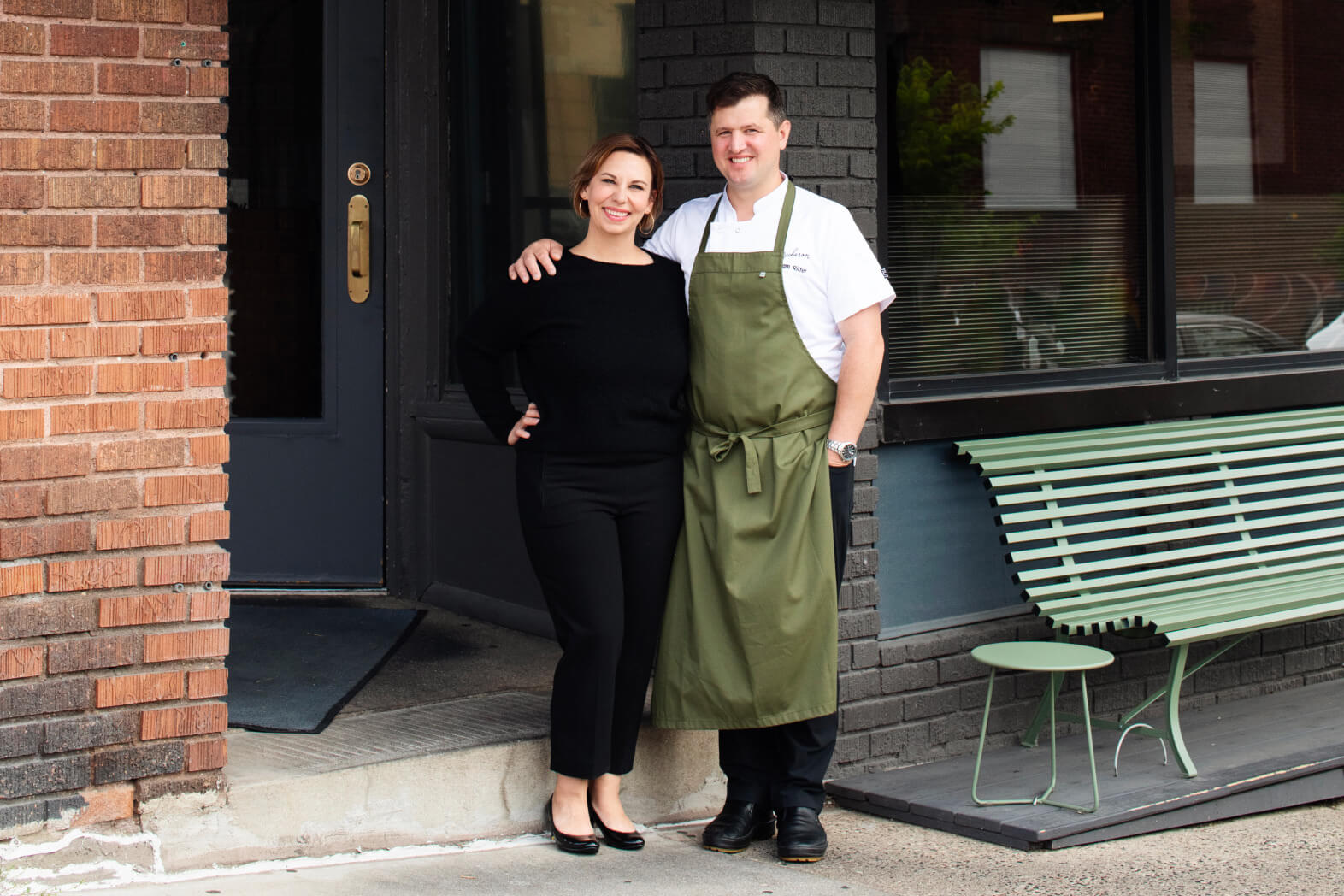
When guests walk through the door at Bûcheron, what do you hope they immediately feel—and what do you think truly sets the restaurant apart?
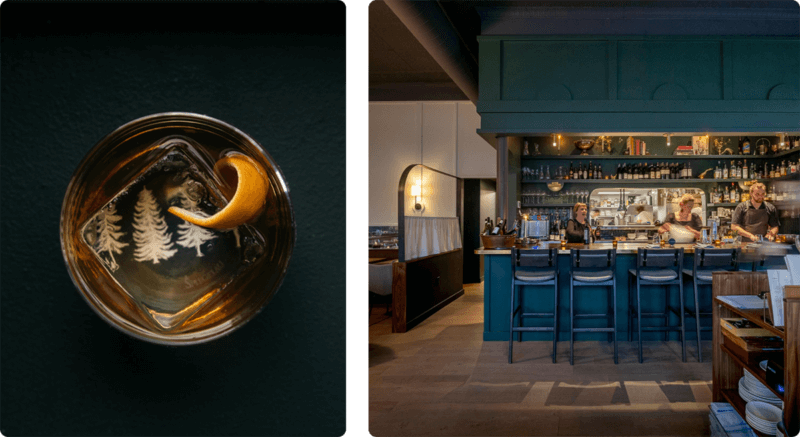
Adam Ritter: When guests walk through our doors, we want their first reaction to be, “Oh man, this is going to be good.” Our restaurant has a distinct energy—a vibe that feels both exciting and inviting. But above all, it’s comfortable. That comfort is key. We love seeing guests dressed up for a proper night out sitting alongside our neighbor in his hoodie at the bar. Somehow, it all works. You get the sense that it’s not just a neighborhood spot, but a special one.
When you decided to open your own place, what were the non-negotiables—things you were unwilling to compromise on, even if they made the process harder?
AR: Quality has always been non-negotiable for us. We’re committed to working with small farmers and using thoughtfully sourced, high-quality ingredients in everything we serve. It costs more to do it this way, but it’s a difference you can taste, and to us it is essential. When a meal seems flavorful but leaves you feeling poorly afterward, it’s often the result of lower-quality ingredients. That’s not the experience we want for our guests and our goal is simple: we want you to leave feeling satisfied and happy, and just as good as you did when you arrived.
You’ve worked alongside some remarkable chefs and mentors. Is there a lesson—technical, philosophical, or personal—that still guides how you cook or lead today?
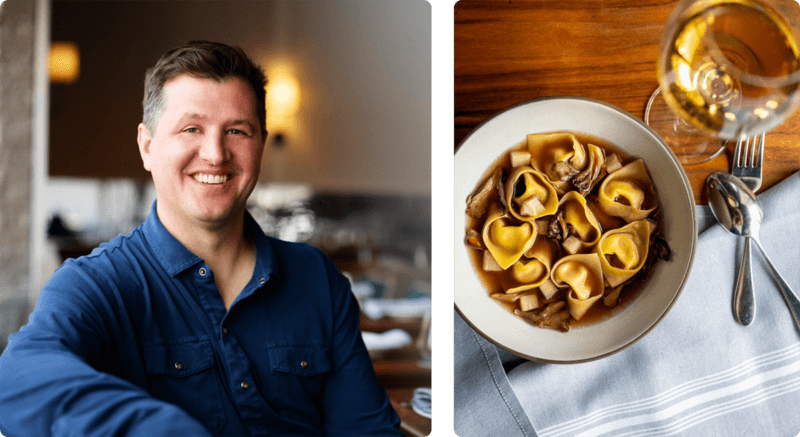
AR: Joël Robuchon always said, “A carrot should taste like a carrot.” In every dish, flavors should enhance and support one another, never overpower. I think about this each time I develop something new. Are the flavors in balance? Can I taste the true essence of each ingredient? Are they working together to create something cohesive and memorable? Nothing is added without purpose. When you close your eyes and take a bite, you should be able to taste every element, each one clear, intentional, and in harmony.
How did the recognition from James Beard change things for you, if at all, and what does an award like that mean within the day-to-day reality of running a restaurant?
Adam and Jeanie Ritter: Winning the JBF Award changed our lives overnight. We still remember the drive home from Chicago after the ceremony, watching our phones light up, emails pour in, and the reservation book steadily fill. We never truly believed we would win, so when we did, we were completely unprepared for the surge in business that followed. We called on friends, hired new team members, and spent much of that summer simply trying to catch up. The award gave us the incredible gift of a full dining room, which is something we will never take for granted.
On a practical, day-to-day level, the biggest change has been our ability to fully maximize our space. Where we once easily filled the 5:30–8:00 p.m. window, we’re now booking tables from 4:30 to 9:30, often gaining an additional turn on many of them. That consistency has brought greater stability in ordering and staffing, allowing us to operate with more confidence and control.
Is there a dish or beverage on the menu right now that feels especially exciting or representative of where Bûcheron is today?
AR: Our Kernza cavatelli with braised bison short rib, caulini, Parmesan, Castelvetrano olives, and orange zest is a dish that represents us beautifully. Kernza is a locally grown, perennial grain that is both highly sustainable and full of flavor. We use it to make our cavatelli, pairing it with local bison for a dish that feels cozy and grounding in the winter months. The Castelvetrano olives and orange zest bring brightness and lift, balancing the richness with just the right amount of contrast. It’s deeply satisfying for this time of year and represents our region in many ways.

How do you think about balance, especially when it comes to family life and personal time?
AR and JR: Balance? What’s balance? In the restaurant industry, it can sometimes feel impossible. But we work at it constantly, doing our best to create some sense of steadiness in the middle of the chaos. We have two little boys, ages three and five, who keep us moving nonstop. Because of that, we’re intentional about protecting quality time and scheduling ourselves thoughtfully so we can truly be with them. They come to events, have dinner in the restaurant basement, and know exactly where to find the paper and crayons in the office. The restaurant is part of their world, just as much as it is ours.
Over the years, one of the biggest lessons we’ve learned is to fully appreciate the seasons when you’re well staffed and able to find balance, and not let it shake you when you’re not. None of it is perfect, and that’s okay.
Are there any shifts or trends in the restaurant world that feel genuinely meaningful to you—or ones you’re consciously choosing to ignore?
AR: It’s been exciting to watch the evolution of casual dining, especially as chefs with fine-dining backgrounds bring that level of precision and discipline into more relaxed spaces. The result is casual food executed at an incredibly high level, with food that is thoughtful, refined, and deeply flavorful, yet approachable. It’s a wonderful shift, making those techniques and flavors more accessible while allowing chefs to find better balance in their own lives.
What’s important to recognize, though, is that many of the chefs leading this movement were trained in rigorous fine-dining environments. That’s where they developed the standards, structure, and technical foundation that now translate so seamlessly into casual settings. Our only question is what comes next. Without that same level of rigor as a training ground, will the next generation of chefs fully understand how to carry those standards forward? Will they be able to translate technique into simplicity while maintaining excellence? Time will tell.
Tell me about a recent meal that felt inspiring. What made it memorable?
AR and JR: Callie in San Diego is a truly beautiful restaurant. Chef Travis Swikard is wildly talented, and his food reflects that. In every dish, you can see the precision and refinement of fine-dining technique applied to food that feels approachable and relaxed. The result is a meal that’s bright, deeply flavorful, and refreshingly unfussy.
Koko Head Cafe in Oahu stole our hearts. We were recently there for a wedding and loved our brunch so much that we went back the very next day. It’s a laid-back space where hospitality is front and center, the Korean-Hawaiian flavors are outstanding, and the camaraderie among the team is genuinely inspiring. There’s a warmth in the room that’s contagious. If you go, be sure to make a little donation to the kitchen’s beer fund, and don’t be surprised if your cheeks hurt from smiling by the time you leave.
What’s next for you and the Bûcheron team? What are you excited about or working towards?
AR: Our immediate goal is to keep pushing Bûcheron forward and continue building on what we’ve created. We waited a long time to open our own restaurant, and after so many years running other chefs’ restaurants prior to this, we’ve been very fortunate to experience success. But we’re still young, and there’s so much more to accomplish at Bûcheron. We also have a wealth of ideas in the hopper, so when the time is right, there’s no doubt that more exciting projects will follow.