You began your journey in sushi at the age of 15. What first drew you to the craft, and what has sustained your dedication over the years?
What first captivated me was the simple joy of creating something with my own hands—and the quiet, meaningful moments shared with guests across the sushi counter. Those two elements have always been my foundation. The discipline of refining my craft day after day, and the human connection that unfolds in front of me—when these come together, I’m reminded of why this work continues to move me, even after all these years.
Sushi Sho has a distinct presence in New York and internationally. What do you believe truly sets it apart?
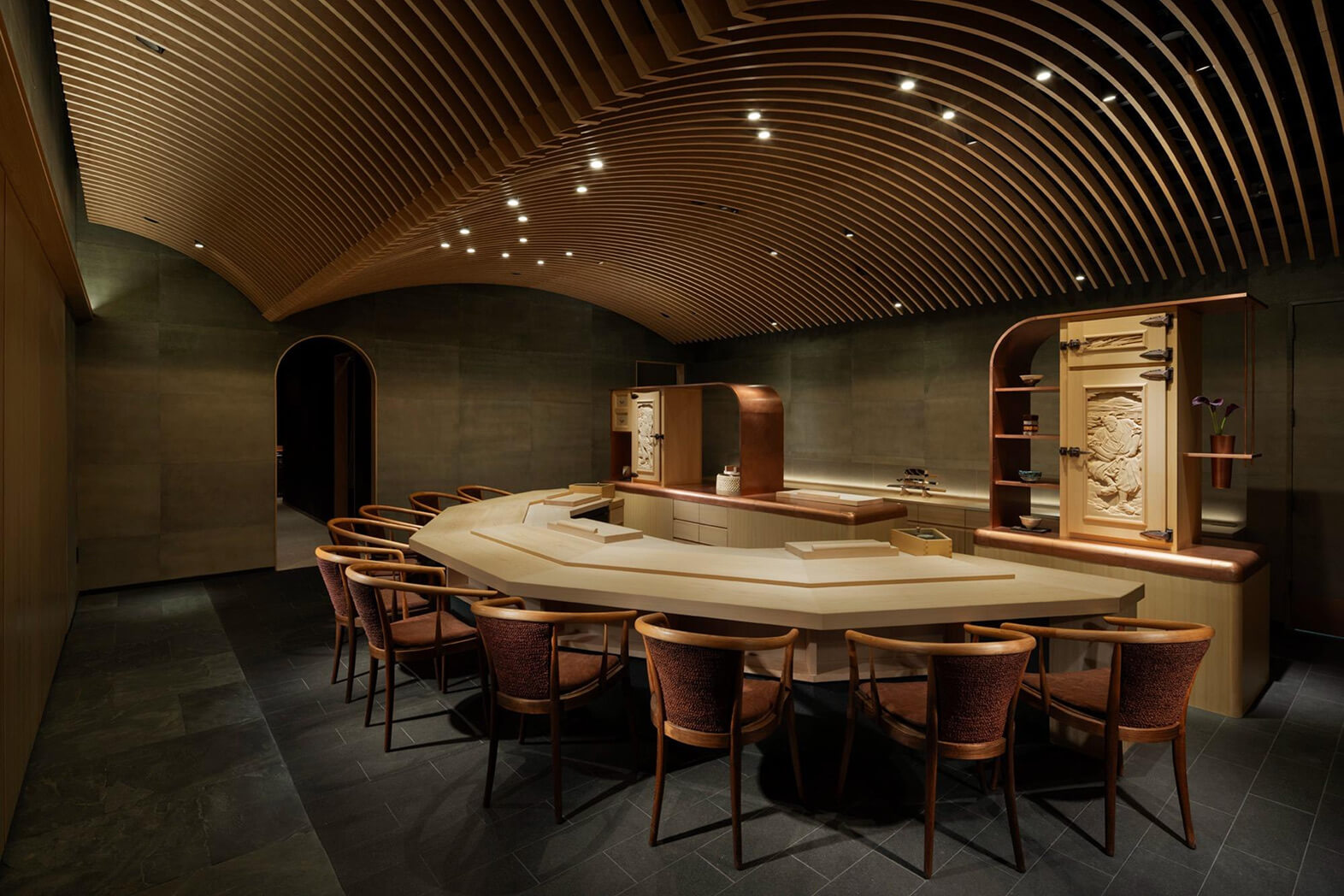
At Sushi Sho, we are committed to preserving the “art of subtraction” that lies at the heart of true Edomae sushi. Equally important is the tradition of okonomi—a style where guests choose what they feel like eating while enjoying a natural dialogue with the chef. To honor that origin, we intentionally keep only half of the experience as omakase, leaving the other half as okonomi. This balance allows guests to choose at their own pace, guided by the conversation and energy shared across the counter.
Okonomi and omakase are often seen as opposing concepts. How do you incorporate okonomi at the counter, and how do these two ideas coexist in your approach?
We offer a balance of half omakase and half okonomi because I want guests to enjoy both—the pleasure of entrusting the chef, and the pleasure of choosing for themselves. At the counter, I value the natural flow that emerges through conversation. Within that flow, I leave room for guests to choose freely whatever speaks to them in that moment. When these two approaches coexist, a uniquely intimate and dynamic “live” experience—one that only a sushi counter can offer—naturally comes to life.
Have you noticed how a no-photography policy changes the way guests experience the food and the moment?
We ask guests to refrain from taking photos because I want them to experience the true, live essence of a sushi counter with all five senses.
The movement of the chef’s hands, the sound of the knife meeting the board, the aroma of tamago as it cooks, the delicate rhythm of chopping scallions—
each of these elements shapes the atmosphere and creates a sense of immediacy that exists only in that moment. My hope is that guests can immerse themselves in those sounds and aromas and savor the experience as it unfolds before them.
Your work is deeply rooted in Japanese cuisine. Are there other culinary traditions—or disciplines outside of food—that influence how you think about sushi?
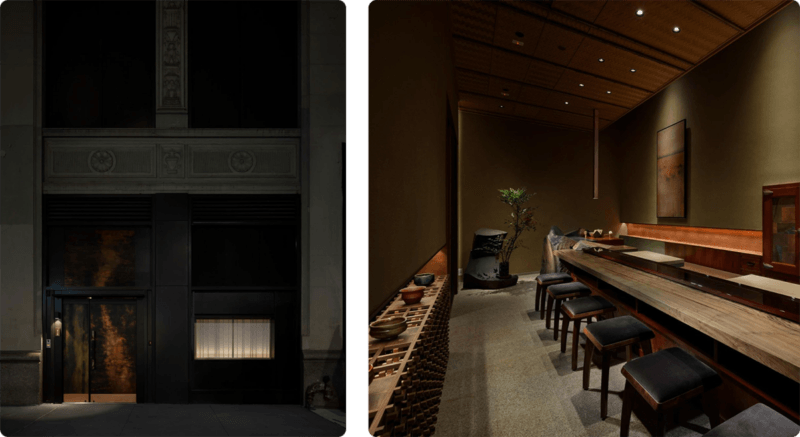
In New York, I’m constantly inspired by many forms of entertainment. In restaurants, both the food and the presentation matter, but at a sushi counter, the most essential value lies in the communication between the chef and the guest. I always keep in mind the meaning of sarashi—standing openly before the guest. A sushi chef stands at the counter, exchanging words and expressions, and together we create the atmosphere of the moment. When that natural back‑and‑forth emerges and the entire counter becomes one, that is when I feel the greatest joy in my work.
Is there a specific ingredient that’s particularly exciting to you right now?
Rather than a specific ingredient, I find myself reflecting more on technique. Before refrigerators and freezers existed, how did chefs interact with ingredients, and what methods did they use to make sushi possible? Imagining their ingenuity—and considering how those ideas can be applied today—is something I think about often. The techniques passed down by earlier generations carry a sense of necessity, a way of bringing out the full potential of each ingredient. Understanding that essence continues to inspire new discoveries in my work today.
Pacing and rhythm are central to the omakase experience. How do you think about timing when serving guests at the counter?
To create the best timing and rhythm, everything begins with teamwork. Because our staff communicates closely every day and understands each other’s movements and breathing, a natural flow emerges at the counter. When everyone is in sync, we can serve each guest at the pace that feels most comfortable and harmonious for them.
When guests leave Sushi Sho, what do you hope they carry with them beyond the meal itself?
Trust. For Sushi Sho, the trust shared between the guest, the chef, and the staff is just as important as the food. Because that trust exists, guests feel, “I want to come back,” or “I want that chef to serve me again,” and we can continue to meet those expectations with sincerity. Rather than a one‑time experience, we hope to build a relationship that brings guests back again and again. Over time, those accumulated moments become irreplaceable for both sides and grow into a lasting connection.